

Carrier oils do more than dilute essential oils: they’re nourishing on their own, especially when it comes to hair care. Whether you’re taming frizz or crafting a DIY scalp oil, choosing the best carrier oil for hair can make a huge difference in your routine.
From lightweight solutions to deeply conditioning oils, each has a unique texture, nutrient profile, and finish. Let’s explore the top carrier oils for different hair types, how to use them, and which ones pair best with essential oils for your next hair-loving blend.
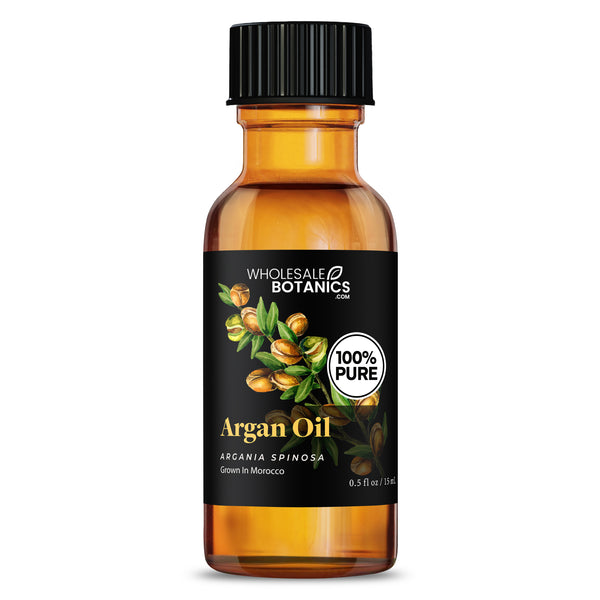
Often called “liquid gold,” argan oil is known for how well it pairs with hair. This carrier is lightweight, high in vitamin E, and rich in omega fatty acids. It’s great for adding shine without greasiness and softening your hair from scalp to tip.
Argan oil is also a great option for smoothing the appearance of frizz and flyaways, making it a great option to aid in getting ready for the day. Since argan’s aroma is a more subtle one, you can add your favorite essential oil to give your hair an aromatic boost that lasts throughout the day.
Argan oil is especially beloved for its fast absorption and nourishing feel. Because of its lightweight nature, it’s suitable for daily use in your hair care routine. Like with any new hair product, though, always be sure to do a patch test before applying it to your whole head.
Grapeseed oil is one of the most lightweight oils you can choose for hair, so light that it almost feels dry to the touch. Because of its texture, grapeseed oil is a great carrier oil for just about any hair type, but especially hair that needs a light touch.
Even though it’s a very light oil, that doesn’t mean it doesn’t have nutrients. Grapeseed oil contains antioxidants and can add a subtle, natural sheen to your hair. Leave-in serums containing grapeseed oil are an excellent way to boost shine and radiance.
Summer haircare routines can also benefit from grapeseed oil, since it’s not too heavy and can be absorbed quickly by your hair. As an added bonus, grapeseed oil’s natural aroma is quite faint, so you can add whatever essential oil you like and not have the carrier interfere too much.
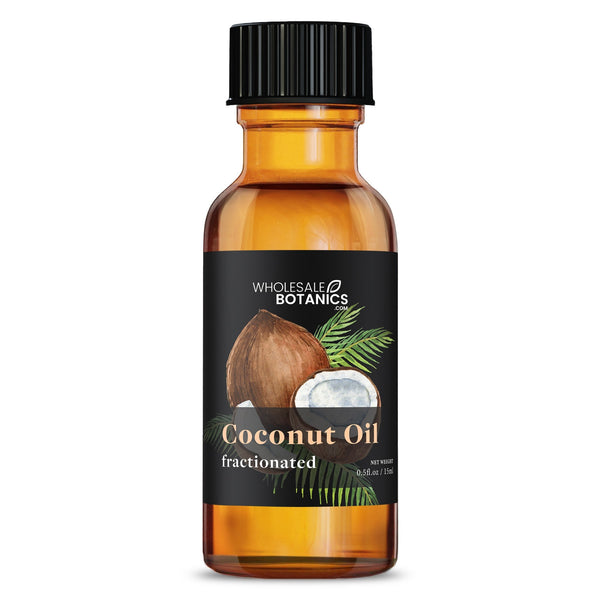
Unlike traditional coconut oil, fractionated coconut oil stays liquid at room temperature. The result is a dense carrier oil packed with nutrients like vitamin E.
Because of its density, fractionated coconut oil tends to work best for curly and thick hair types. It can also be a great option for nourishing pre-shampoo hair masks and detangling serums. Since coconut oil can be a bit dense for some hair types, it’s best to patch test this oil so you know how your scalp will react before applying it to your entire head.
Coconut oil has the benefit of being almost totally fragrance-free, making it a superior base for essential oils you already like to use in your hair care routine.
Thick and sticky, castor oil is best used in small amounts or blended with lighter oils. It’s rich in ricinoleic acid, which makes it a go-to for targeted scalp massage, hairlines or edges, and sealing ends in protective styles.
Because of castor oil’s texture, you’ll want to be careful with your usage frequency as using this oil too often may result in buildup on your scalp. For best results, begin using it once a week and avoid leaving it in overnight.
When blending castor oil with other essential oils (or additional components in your hair care routine) keep in mind that it tends to have a faint earthy smell. This can be complementary to many essential oils, especially herbaceous ones like tea tree for a rejuvenating blend, or rosemary for an earthy vibe.
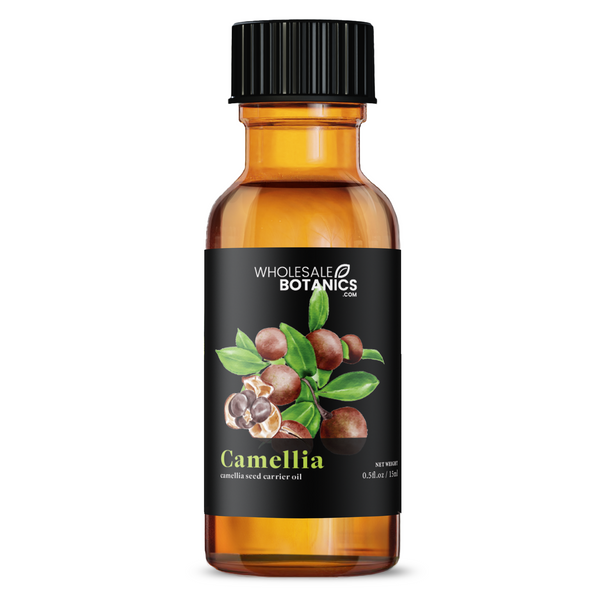
Lightweight but luxurious, camellia seed oil has been used in Japanese hair rituals for centuries. It’s a great fit for all hair types and can be a particularly good base for silky leave-in oils.
When you use camellia oil, either during your morning hair routine, added to your shampoo, or as a leave-in oil, it enhances the appearance of frizz control and shine in your hair. Another oil rich in vitamin E, camellia seed oil delivers nutrients to your hair to keep it looking soft.
Camellia seed oil also blends beautifully with floral essential oils for an added touch of luxury. Florals like chamomile or Ylang Ylang boost the sense of indulgence that camellia seed oil offers and also complement camellia’s natural herbaceous aroma.
| Variety | Scent Profile | Oil Consistency |
|---|---|---|
| Argan | Mild, nutty aroma | Lightweight |
| Grapeseed | Neutral scent with a slight crisp note | Very lightweight - feels dry to the touch |
| Fractionated Coconut | Practically odorless | Dense |
| Castor | Faint, mild, nutty, and earthy smell | Dense and sticky |
| Camellia | Slightly herbal aroma | A balance of lightweight and luxurious |
Unlike essential oils, carrier oils are made from the fatty components of plants, like seeds, nuts, or fruit.. While they’re commonly used to dilute essential oils, many carrier oils are nourishing enough to stand alone in your hair care routine.
Below, we dive into more detail about what makes each carrier oil unique, so you can choose the best one for your routine.
Carrier oils are gentle, nutrient-rich, and often provide unique benefits that support the strength, shine, and manageability of hair.
Lighter oils like argan, grapeseed, and camellia have the benefit of adding a gentle touch to your hair care routine and can be used daily. More dense oils like like fractionated coconut and castor make excellent bases for hair masks and nourishing serums.
Any of these oils can be perfectly complementary to your favorite essential oils and essential oil blends, but they can also stand out on their own. This offers a level of versatility that you don’t always get with just essential oils.
The versatility of carrier oils makes them valuable in any hair care routine. Carrier oils can be massaged into the scalp to encourage moisture balance, blended into masks or conditioners for added softness, or applied lightly to the lengths of damp hair to enhance smoothness and reduce frizz.
The intended use of each of these oils depends on the specific carrier you choose. Massaging oils such as camellia directly into the scalp can help promote a more radiant scalp environment.
Richer oils like castor or coconut can be blended into masks or conditioners to give a hydrating feel. Lighter options, including argan and grapeseed, can be smoothed over the lengths of damp hair to enhance softness, tame the appearance of frizz, and create a natural, polished shine without weighing the hair down.
Many oils also deliver essential fatty acids, antioxidants, and vitamins that nourish both the scalp and hair follicles. By choosing the right carrier oil, individuals can customize treatments to address their unique hair needs, across all hair and scalp types.
Carrier oils not only nourish the skin and hair but can also influence the overall aroma of a blend. Some oils are prized for being virtually odorless, making them excellent bases when you want your chosen fragrance to take center stage.
Fractionated coconut oil, for example, carries almost no scent at all, while camellia oil has only the faintest hint of herbalism that disappears easily once layered with stronger notes. Even better, this scent can be combined with floral notes to create a whole new aroma.
Other carrier oils contribute a delicate fragrance of their own, which can complement rather than compete with added scents. Because they are derived from plants, many retain subtle earthy undertones that feel soft, natural, and refreshing.
This quiet backdrop can create a sense of balance in perfumes, skincare products, or hair treatments, lending warmth and dimension without overwhelming the senses.
For those who prefer carrier oils with a touch of character, options such as grapeseed, castor, and argan offer distinct profiles. Grapeseed has a clean, crisp freshness.
Argan, on the other hand, brings a deeper, slightly musky earthiness; similarly, castor oil brings a nutty earthiness to the table. Each one pairs beautifully with essential oils or natural-style fragrances, adding depth and complexity to the final creation.
Among carrier oils, fractionated coconut oil is typically the most affordable choice. Its wide availability, long shelf life, and multipurpose uses make it a reliable option for beginners and experienced users alike.
Grapeseed oil is another affordable option, usually priced just above coconut oil. Extracted as a byproduct of the winemaking industry, its plentiful supply helps keep costs low. Castor oil, though slightly thicker and heavier, also falls within the lower price range.
In the mid-price range, you will find oils such as argan. Argan oil’s somewhat higher costs reflect both popularity (especially for hair care) and the more intensive extraction methods required to produce it.
At the higher end are specialty oils like camellia, prized in traditional Japanese and Chinese beauty rituals. Known for its lightweight, non-greasy feel and ability to soften and smooth hair, camellia oil commands a higher price due to its more limited production and strong reputation as a luxury beauty ingredient. While not essential for every collection, it is often considered a worthwhile investment for those seeking premium quality.
The origin of a carrier oil greatly influences its properties, from texture and absorption to its therapeutic value. Most are pressed from seeds or kernels, and the plant they come from shapes both their chemical composition and their history as products in beauty rituals.
Take grapeseed oil, for instance. Derived from the seeds of Vitis vinifera, a common byproduct of winemaking, it produces a fast-absorbing oil that works well in massage blends and facial serums. Similarly, castor oil is obtained from the seeds of Ricinus communis and camellia oil is extracted from the seeds of Camellia japonica.
Fractionated coconut oil, on the other hand, is extracted from the inner flesh of Cocos nucifera, better known as “the coconut.”
Finally, argan oil comes from a nut that’s been dried. The oil comes from the kernel that’s inside the nut, which gets ground into a fine paste.
Carrier oils are produced through several extraction techniques but the most common, cold pressing, is one of the most respected methods. Oils such as camellia and argan are obtained this way, with steady pressure applied to the seeds or paste made from kernels.
Castor oil also needs a press, but the process requires special handling to remove the natural toxins.
Some oils take more creative paths. Grapeseed oil, for instance, is rarely cold-pressed. This is because the winemaking industry has a surplus of grapeseed oil left over from the winemaking process.
Together, these examples show how plant source and extraction method shape a carrier oil’s purity, effectiveness, and ideal uses.
The country of origin for a carrier oil is often more complex than the native range of its plant. Production frequently shifts to regions with the right climate, infrastructure, and economic demand.
Fractionated coconut oil is primarily sourced from regions such as Vietnam, Sri Lanka, and the Philippines, where coconut palms thrive and oil-processing industries are well established.
Argan oil is sourced almost exclusively from Morocco, where argan trees are natively grown.
Castor oil, meanwhile, is strongly associated with India, which supplies the majority of the global market due to its ideal growing conditions.
Camellia remains largely tied to East Asia. It continues to be produced in smaller, specialized quantities, with Japan and China regarded as leading sources.
When it comes to vitamin E, several carrier oils stand out. Argan oil is naturally abundant in tocopherols that help stabilize the fats within its kernels while grapeseed oil offers antioxidant compounds designed to protect the seed.
Fractionated coconut oil is also rich in vitamin E, by way of fatty acids. Together, these oils deliver strong antioxidant benefits and help nourish the skin.
Camellia oil also contains vitamin A, but it is particularly noteworthy for its trace amounts of vitamin D, a nutrient rarely found in carrier oils.
Castor oil, while less vitamin-rich, stands out for its unique fatty acid profile, dominated by ricinoleic acid. Thick and deeply emollient, it is valued for its ability to lock in moisture and support skin barrier repair.
Argan oil is the most popular carrier oil choice for hair because of its quick absorption and minimal fragrance, though which is best depends on your hair's specific needs.
Argan oil and camellia oil are both considered premium, luxury hair oils.
You can use more than one carrier oil in your hair routine, but be cautious when mixing. Some carrier oils can be heavy and are meant to be used sparingly; layering too many may cause heaviness on your scalp.
No, you don’t need to dilute carrier oils before applying them to hair. In fact, you can use carrier oils to dilute essential oils for hair.
For the most part, no; when carrier oils are used as instructed, you’re unlikely to encounter any issues. However, if you find that a carrier oil causes greasiness or buildup, stop usage and switch to a lighter oil.
Carrier oils can last one to two years and should always be stored in a tightly sealed container away from direct sunlight and excess heat.