

From facial oils to body butters, carrier oils are the foundation of many skincare rituals. They’re not just “neutral bases” but provide lots of potential benefits themselves. Choosing the best carrier oil for skin can elevate your entire routine, whether you're crafting a custom blend or keeping things beautifully simple with oils on their own.
Let’s explore which carrier oils suit different skin types, how to use them, and how to find your skin’s perfect match.
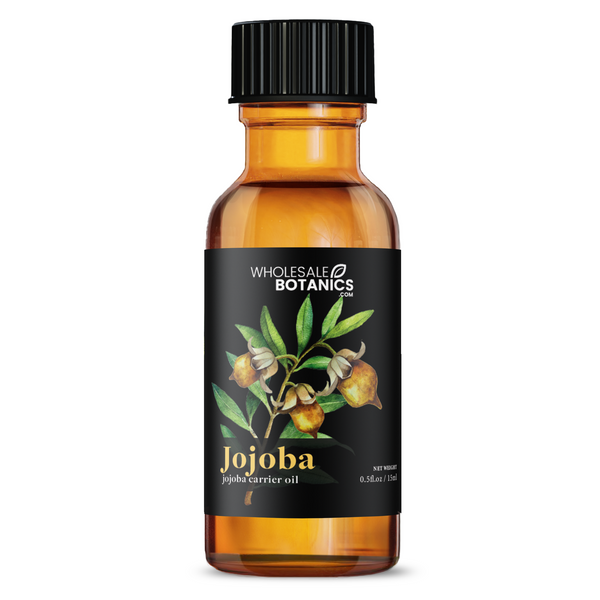
Jojoba oil closely mimics the skin’s natural sebum. It’s lightweight, tends to be non-comedogenic, and absorbs quickly without leaving a greasy residue.
This oil is perfect for oil cleansing and increasing your complexion’s natural radiance. Its texture makes it suitable for daily use, and it tends to work with all skin types. Always make sure to do a patch test before you put any new oil all over your skin, though.
Jojoba is also a great base oil for custom essential oil blends thanks to its long shelf life and neutral scent. Since it has a fairly neutral scent, most essential oils or oil blends will be complementary. Alternatively, you can add jojoba to a daily moisturizer.
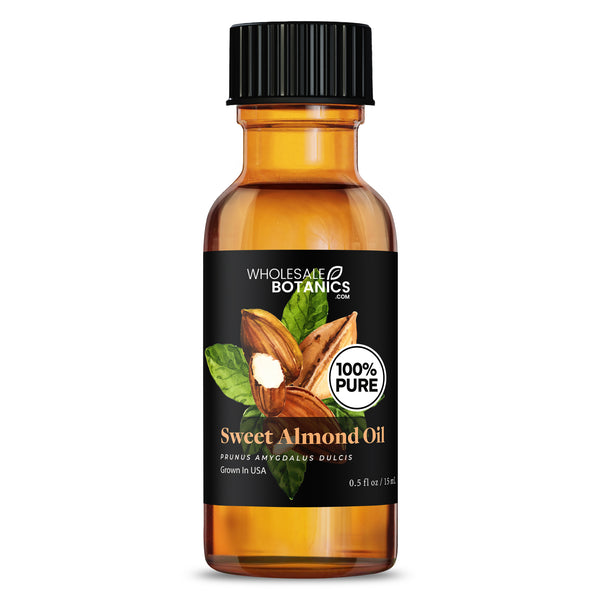
Mild and nourishing, sweet almond oil is slightly richer than jojoba but still absorbs well. It’s packed with vitamin E, zinc, and fatty acids, which can help your skin feel soft and supple.
Because of its slightly thick texture, sweet almond oil is best for body oils and as a base for gentle massage oils. Sweet almond oil’s ability to make your skin feel soft makes it a great choice for use as a base for body care serums.
Its light golden color and faintly nutty scent make it a beautiful addition to DIY body butters or bath oils.
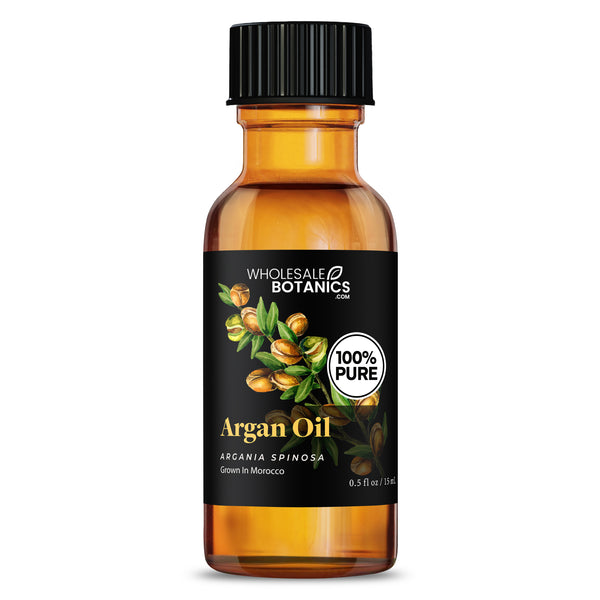
Argan oil is nutrient-rich but has a surprisingly dry finish, meaning it doesn’t leave skin feeling sticky. It’s loaded with vitamin E, making it a favorite for facial serums as well as neck and décolletage care.
Its silky texture and slightly nutty scent also make it a luxurious base for nourishing masks. Since it’s so lightweight, argan oil is also a suitable choice for nighttime skincare rituals, including serums that you leave on overnight.
Argan oil does have a bit of a musky aroma to it, and while it’s subtle, you may need to be judicious if you’re planning on adding essential oils to it. Frankincense, lemon, and orange tend to complement argan oil’s natural aroma nicely.
A dry-feel oil with a light, silky finish, grapeseed oil is ideal for those who want the feel of hydration without heaviness. Because of its extremely lightweight texture, grapeseed oil pairs excellently with all skin types, though always do a patch test before using any new oil in your skincare routine.
Grapeseed oil is a perfect solution for summer skincare, DIY makeup removers, and lightweight facial oils. It also works well in facial massage blends and gua sha routines due to its slip and quick absorption rate.
On top of having such a lightweight texture, the fragrance of grapeseed oil is almost neutral. This makes it a great base for your favorite essential oils, or it can be added to moisturizers and serums already in your routine.
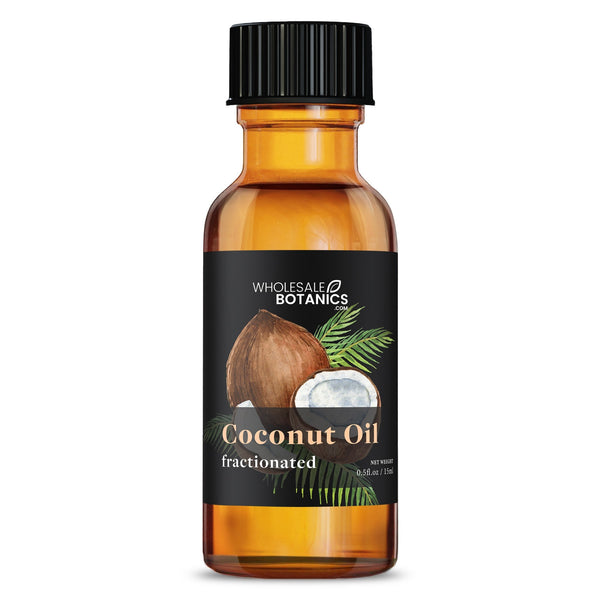
Fractionated coconut oil stays liquid at room temperature and has a long shelf life. This oil is totally neutral in scent and more dense than the other carrier oils on the list, making it a great solution for body care and soft skin.
Because fractionated coconut oil is odorless, thick, and clear, it’s ideal for body massage blends, enhancing radiance in the legs and arms, and bath oil blends. If you’re using any essential oil in the tub along with the fractionated coconut oil, do be careful getting out as oils can be very slippery.
Fractionated coconut oil is non-staining and washes out of fabrics easily, making it a practical choice for massage or DIY scrubs. Some people may find it too rich for facial use, so be sure to perform a patch test first.
| Variety | Scent Profile | Oil Texture |
|---|---|---|
| Jojoba |
Almost odorless, with a faint nutty/earthy undertone |
Very lightweight |
| Fractionated Coconut | Practically odorless | Rich; for body use |
| Sweet Almond | Light, slightly sweet, and nutty aroma | Somewhat lightweight |
| Grapeseed | Neutral scent with a slight crisp note | Lightweight; has a dry-fee |
| Argan | Earthy fragrance; can be slightly musky | Lightweight and silky |
Carrier oils are powerful skincare allies, each offering unique benefits that support different needs. Whether you’re crafting a personalized facial serum or creating a hydrating body oil, the key is selecting a carrier oil that complements your skin’s natural balance.
Take your time exploring, notice how your skin reacts, and feel free to combine different oils until you find the blend that works best for you.
Unlike essential oils, carrier oils are made from the fatty components of plants, like seeds, nuts, or fruit. They’re gentle, nutrient-dense, and often carry their own unique benefits for the skin’s appearance and texture.
While they’re commonly used to dilute essential oils, many carrier oils are nourishing enough to stand alone in your routine. Very lightweight oils like jojoba, argan, and grapeseed have the benefit of delivering nutrients to your skin without adding a heavy, greasy feel.
Carrier oils with more density, like sweet almond or fractionated coconut, have the benefit of sticking with your skin for longer periods of time, making them great for overnight skin serums.
These carrier oils are also incredibly versatile: add them to moisturizers, mix with clay for a face mask, or apply directly to damp skin post-shower for an easy glow-up.
There are several different ways you can use essential oils in your skincare routine. Apply a few drops to clean, damp skin to lock in a soft feel. Light carrier oils like argan can be layered under moisturizer or used alone, depending on your skin’s needs.
Dilute essential oils into a dense carrier oil like fractionated coconut (or even a lighter one like sweet almond) for a relaxing, customized massage blend. Always patch test before full-body use, especially if you're trying a new oil.
Oils like grapeseed and jojoba are wonderful for oil cleansing. Massage into dry skin, then remove with a warm, damp cloth to help gently dissolve makeup. Mix your favorite carrier oil with a few drops of essential oil (like bergamot, cedarwood, or vanilla) for a beautiful post-shower body oil.
If you want a carrier oil that won’t interfere with your perfume, there are excellent options available. Jojoba oil and fractionated coconut oil are almost scentless, making them perfect if you prefer your fragrance to stand out. While jojoba carries a barely noticeable nutty undertone, it’s so light that it easily fades behind perfumes or deodorants.
For those who enjoy a little natural aroma, some carrier oils can add depth without being overwhelming. Since they come from plants, many of these oils carry subtle earthy notes. This makes them feel grounded, warm, and connected to nature. These are perfect if you like fragrances that lean toward natural or botanical profiles.
Sweet almond, grapeseed, and argan oils are wonderful choices in this category. Sweet almond oil offers a delicate, sweet nuttiness, while grapeseed is lighter and fresher. Argan brings a richer, slightly musky earthiness. All three can blend beautifully with essential oils or natural-style perfumes to create a soft, balanced scent.
When comparing carrier oil prices, fractionated coconut oil usually comes out as the most affordable. Thanks to its stability, versatility, and large-scale production, it’s often sold in bulk, making it a cost-effective choice for those who like to stock up.
Grapeseed oil follows closely behind in affordability, since it’s a common byproduct of winemaking and is produced in high volume with relatively few competing uses.
In the mid-range, jojoba and sweet almond oils tend to cost more, yet they’re still considered reasonably priced compared to premium options. Their popularity in both skincare, food, and aromatherapy drives demand, while the more detailed extraction methods also contribute to the price.
On the higher end, argan oil stands out as the most expensive. Argan oil is labor-intensive to extract and primarily imported from Morocco, giving it one of the steepest price tags in the group.
Carrier oils come from a wide variety of seeds and kernels, each plant lending unique properties to the oil it produces.
Jojoba oil is pressed from the seeds of Simmondsia chinensis, a desert shrub known for its resilience. Fractionated coconut oil is sourced from the inner flesh, or kernel, of Cocos nucifera, while sweet almond oil is made by cold-pressing the seeds of Prunus amygdalus var. dulcis.
Grapeseed oil, as the name suggests, is produced from the seeds of the common grapevine, Vitis vinifera.
Argan oil is extracted from the kernels of Argania spinosa, a tree native to Morocco and valued for its rich nutrient profile.
These natural origins shape not only the chemical makeup of each oil but also its long-standing role in both traditional practices and modern skincare.
The ways in which carrier oils are extracted from seeds and kernels can vary, though many follow a similar pattern. Cold pressing is one of the most common methods and is used to produce oils like argan, jojoba, and sweet almond.
This technique relies on steady pressure, applied either through traditional weighted systems or modern hydraulic presses, to slowly release the oils. While the process takes more time compared to other methods, it helps maintain the oil’s natural nutrients and ensures a high-quality final product.
In the same vein, for fractionated coconut oil, all the oil is extracted from the fruit of the coconut plant. From there, it’s melted down and then slowly cooled at room temperature to separate out the impurities. Once the oil separates, it’s filtered so any remaining coconut flesh crystals are taken out.
Grapeseed oil is a little different. Though cold-pressed versions exist, they are less common due to higher costs. Instead, grapeseed oil is typically derived as a natural byproduct of winemaking. This not only makes use of leftover seeds that might otherwise go to waste but also gives vineyards an additional source of revenue by selling the seeds to oil producers.
While all of these plants stem from an indigenous land, the country of origin for your carrier oil may be more complicated than that.
A modern example of this is the jojoba plant. While it is indigenous to Northern Mexico, the United States is currently the largest producer of jojoba products, including oils. The United States is also known for its production of sweet almond oil, although these almonds are traditionally sourced from the Mediterranean.
On the other hand, argan oil is still most commonly made in its indigenous land. Morocco is currently the largest producer of argan oil. Fractionated coconut oil is usually produced in more tropical countries such as Vietnam and Sri Lanka.
Since grapeseed oil comes from winemakers’ grapes, it’s hard to pinpoint an exact country of origin. Though, like with wine, most of it comes from France, Italy, and Switzerland, though the United States is catching up.
If vitamin A is what you’re after, sweet almond oils is an excellent choice. It’s naturally rich in retinoids, supported by high levels of oleic acid (omega-9) and linoleic acid (omega-6) that work to nourish, protect, and revitalize the skin.
For vitamin E, turn to argan, fractionated coconut, jojoba, and grapeseed oils. Their richness comes directly from the plants they’re derived from: argan kernels contain tocopherols that stabilize the seed’s fats, coconut oil contains long-chain fatty acids after extraction, grapeseeds produce antioxidant compounds to safeguard their seeds, and jojoba relies on vitamin E for durability in hot, arid desert environments.
The best carrier oil for skin depends on your skin type and personal preference, though jojoba oil tends to be a favorite since it’s lightweight and easily absorbed.
The best way to choose the best carrier oil for your skin type is to research beforehand and do a patch test when you get the oil.
Some carrier oils can clog pores depending on your skin type and how often you use them. However, certain oils, like jojoba oil, typically don't clog pores. Always begin using a new oil sparingly to see how your skin reacts.
For a carrier oil patch test, you’ll want to put a small amount of the oil on a bit of skin, wait, and see if there’s a reaction. It’s best to put it on skin that’s not too obvious, like the side of your neck, just in case there is a reaction.
When stored in tightly sealed containers away from direct sunlight, carrier oils for skin can last around 1-2 years.